Hi, I'm Jerome Vidry. I live in Montreal since 2007.
PHP Developer since 2005. I worked on any kind of projects, from basic website, to more complex systems, including mobile applications.
I have a deep knowledge of PHP capabilities and I am able to solve any kind of problem.
I am able to lead a project, from the conception, to the delivery, managing the development of the different modules.
Find more about my previous work in my Portfolio.
PHP Developer since 2005. I worked on any kind of projects, from basic website, to more complex systems, including mobile applications.
I have a deep knowledge of PHP capabilities and I am able to solve any kind of problem.
I am able to lead a project, from the conception, to the delivery, managing the development of the different modules.
Find more about my previous work in my Portfolio.

























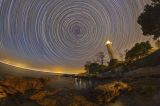
 Astronomy Picture Of the Day
Toolondo Totality Trails
In this composited night skyscape, stacked exposures trace graceful
star trails above Lake Toolondo, Victoria,
Australia, planet Earth.
Captured while the
lunar eclipse
of March 3 was
in progress,
the exposures used were made during the hour-long
total eclipse phase.
So faint star trails are easily visible along with
the trail of the reddened Moon in the
eclipse-darkened skies
above the lake and trees.
Of course, the apparent motion of Moon and stars revealed in the
timelapse composite
reflect the
Earth's daily rotation
around its axis.
Dramatically punctuating the Moon's trail as totality ended,
a single, separate telephoto image of the totally eclipsed Moon was scaled and
blended into the scene.